 GOROCK
Scoring the numbered toss game without arguments
The scoring is the game. Get it right and nobody has to referee.
The two rules that matter
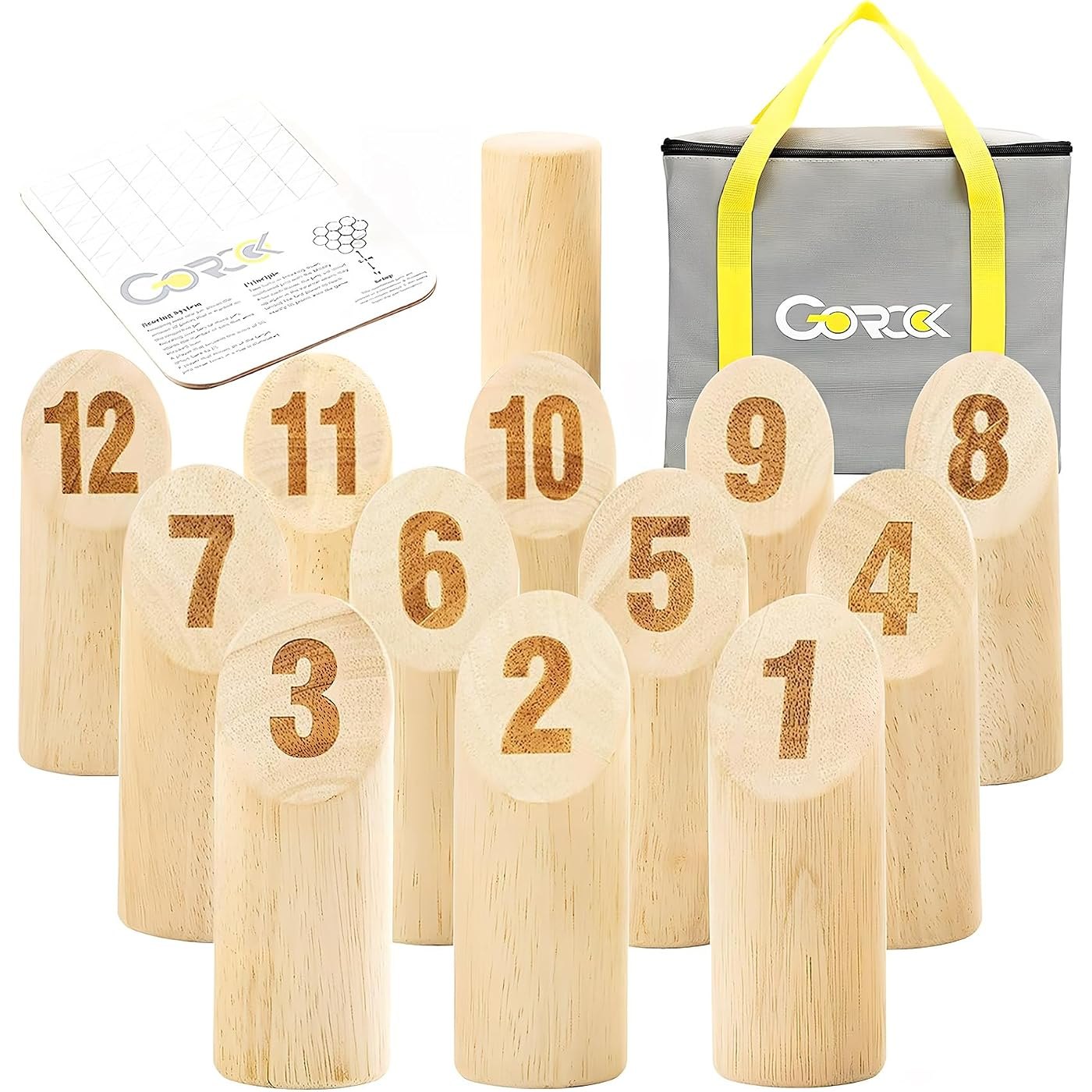
Knock down exactly one block and you score the number printed on that block. Knock down two or more and you score the number of blocks you knocked down — not the sum of them. A throw that flattens five blocks scores five, while a careful throw at the twelve scores twelve.
That inversion is why the game is about aim rather than force, and why the person who threw hardest is usually losing.
Fifty, and the drop to twenty-five
First player to exactly fifty wins. Go over fifty and your score drops back to twenty-five. In practice a player on forty-six spends the next three turns trying to hit a low number, and the person on thirty catches up while they do it.
Score on the card in the bag rather than on a phone. Phones get picked up for other reasons and the game loses its thread.
Where the blocks go, and where you throw from
After every throw, stand the knocked-down blocks back up where they came to rest, not where they started. The circle spreads across the lawn as the game runs, and that drift is the second half of the difficulty.
Throwing distance starts at about ten feet and moves in for younger players. Underarm, pin spinning end over end — a flat throw slides along the grass and knocks everything down, which as you now know scores almost nothing.
House rules worth adding
Three consecutive misses and you are out is the common one, and it keeps a long game moving. Some groups play that the king block — if you have marked one — ends the game instantly.
Whatever you add, agree it before the first throw. This is a game that ends in a disagreement about a rule nobody set, every time, unless somebody sets it.
The sets these notes were written for
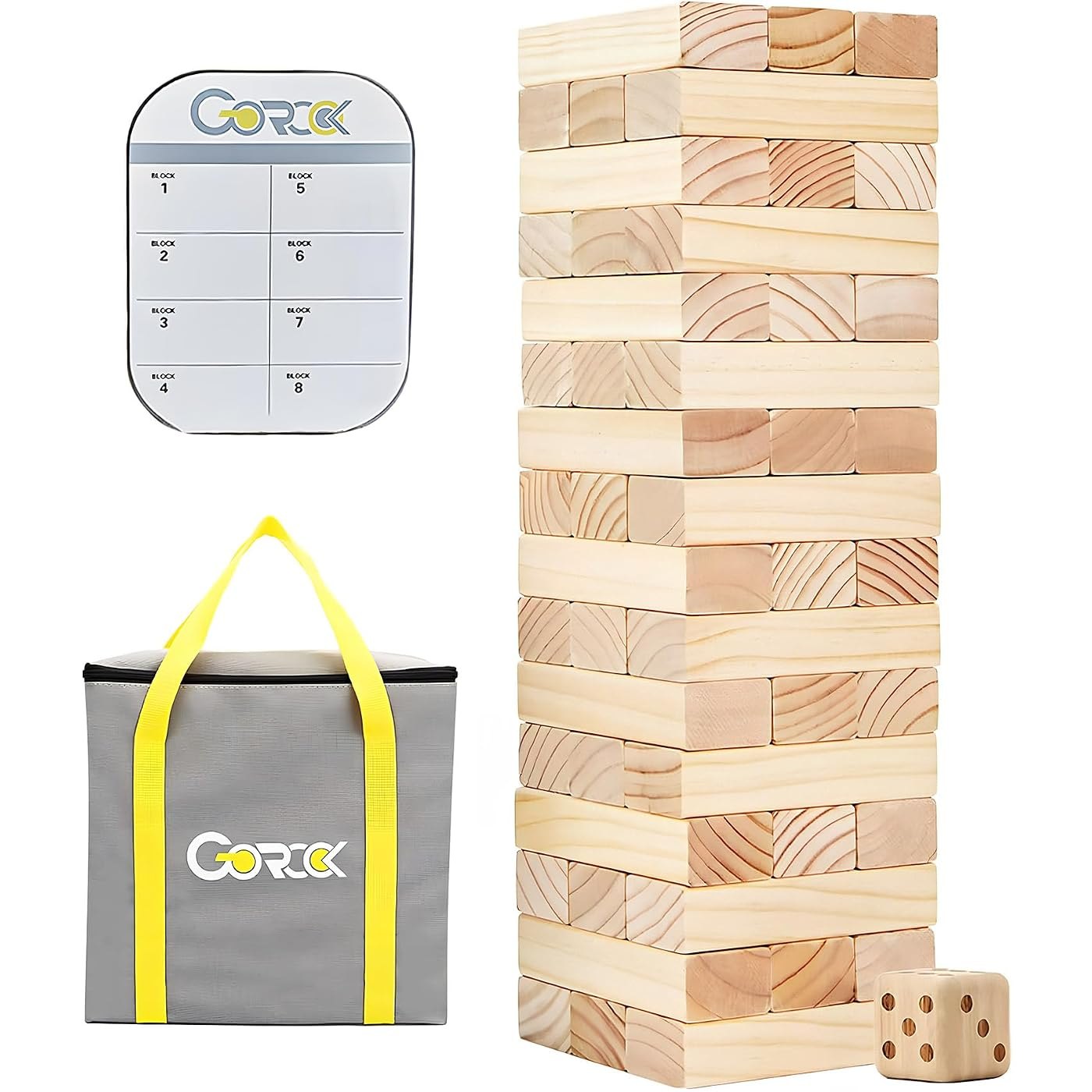
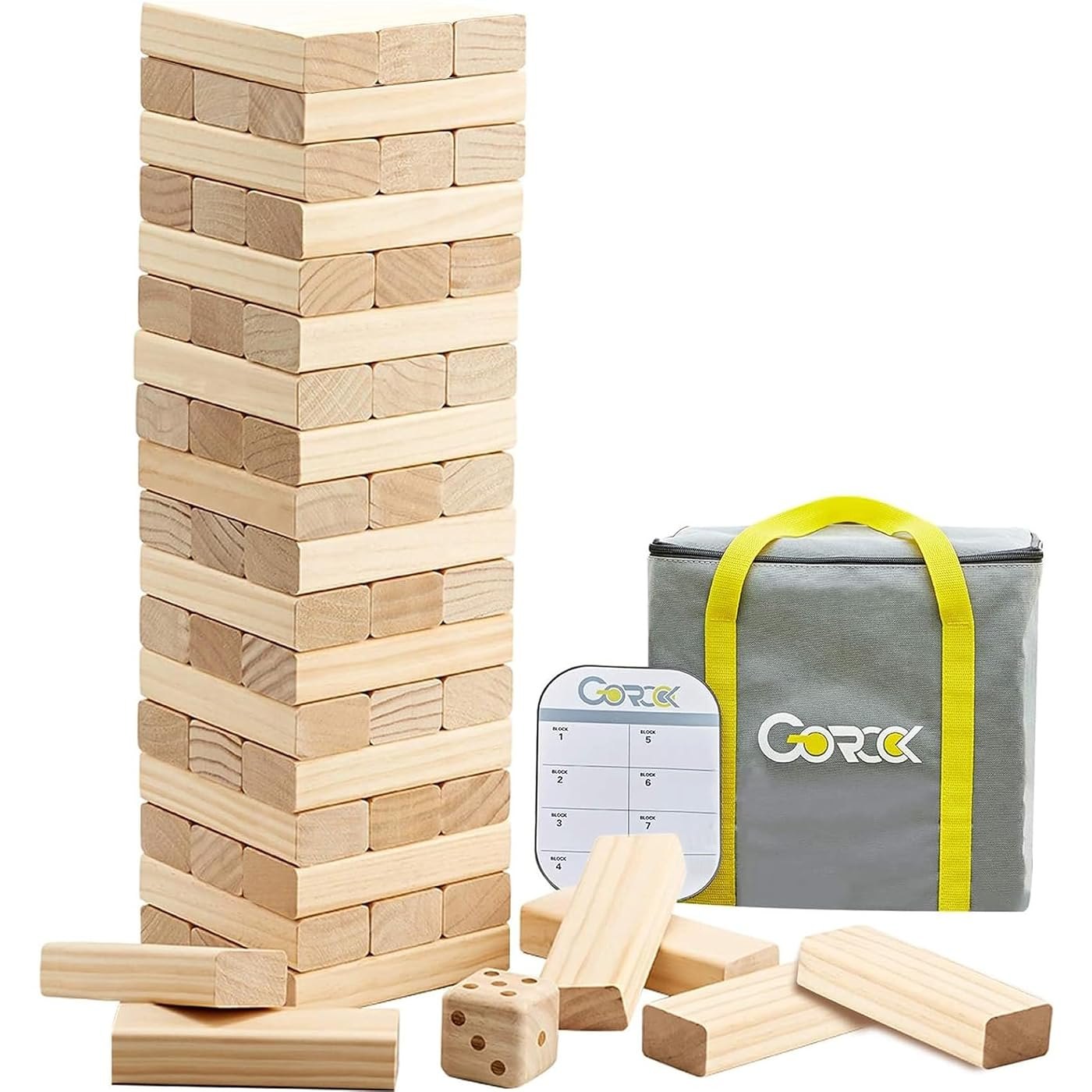
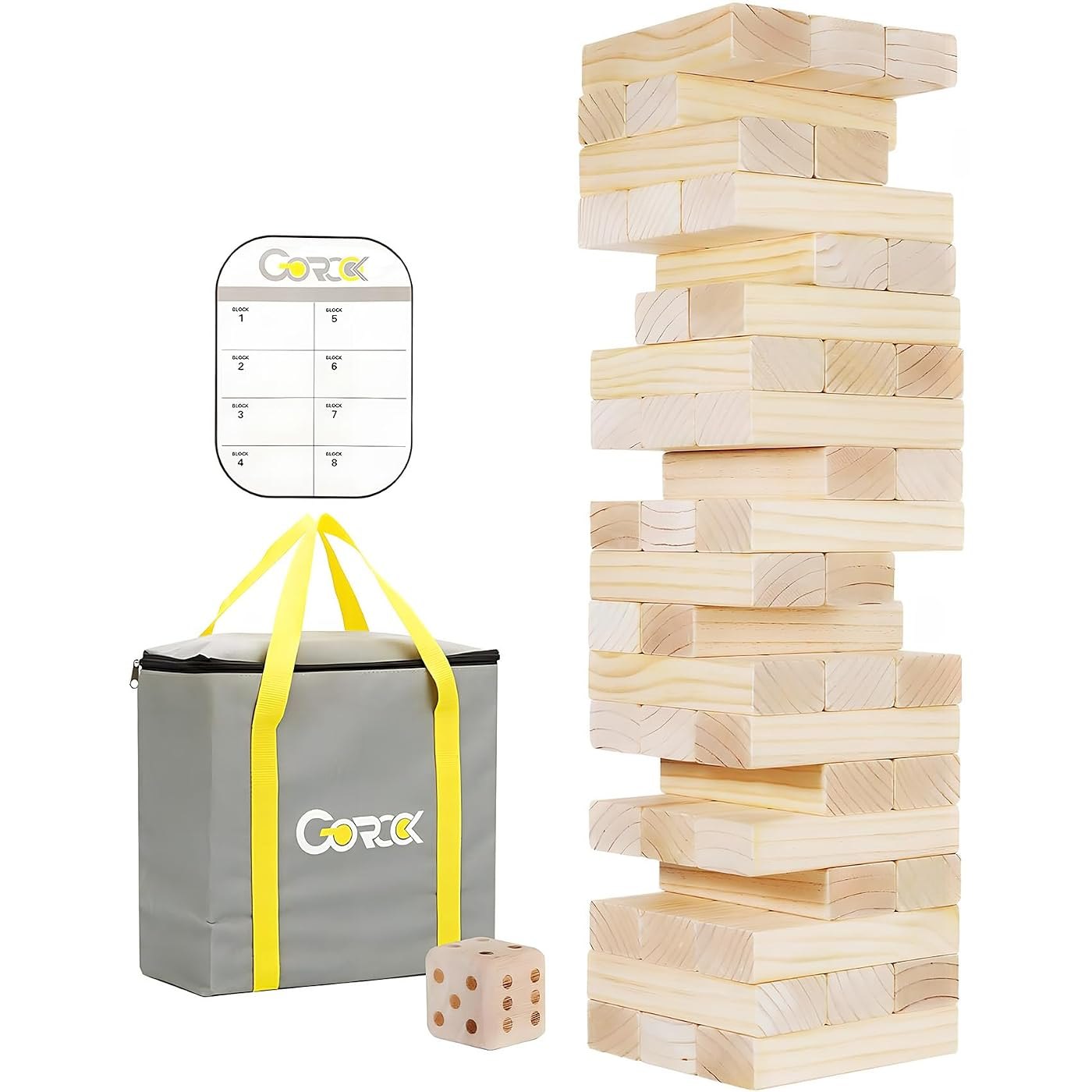
Everything above came out of using our own four sets — three giant tumbling towers and the numbered toss game. Each has its own page with measurements and what buyers said.