 GOROCK
Finding a level patch before the first block goes down
Every bad game of giant tower we have watched started with ground nobody checked.
Read the slope before you unpack
Lawns are rarely flat and almost never level. Stand where you plan to build and look along the grass at ankle height rather than down at it — a slope that is invisible from above shows up immediately in profile. A tower leaning one degree at the base is leaning six inches at five feet, and it will come down on the twelfth pull no matter how careful everyone is.
If the only flat spot is in the shade, take the shade. A level patch under a tree beats a sunny slope every single time.
The doormat test
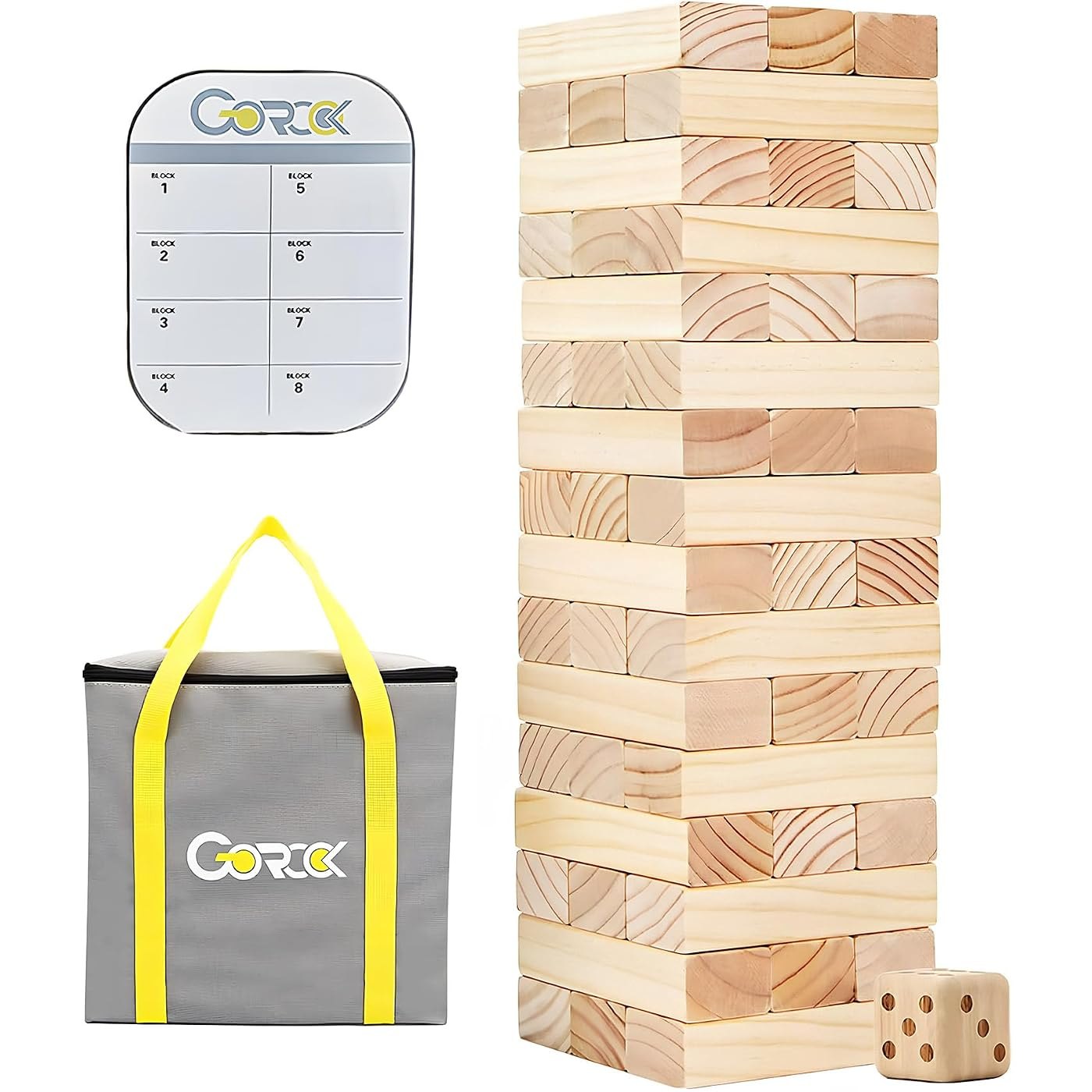
The base of any of our towers fits inside a doormat. That is the whole footprint you need, and it is the easiest way to test a spot: put something rigid and flat down — a chopping board, a tray, a plastic lid — and see whether it rocks. If it rocks, the tower will too.
Clearance is the measurement people forget. The footprint is a foot square; the space you need is roughly a metre on every side, because that is where the blocks go when it falls.
Thick grass, decking, gravel
Long grass is worse than slope. Blades push up under the bottom row unevenly and the whole stack sits soft. Cut it, or move. A folded picnic blanket under the base fixes a soft lawn better than most people expect.
Decking is excellent if the boards run flat and you build along them rather than across the gaps. Gravel is the one surface we would tell you to skip — nothing sits square on it, and a block that lands on a sharp stone chips.
Indoors on a hard floor, build the smallest set you own. A jumbo tower coming down on tile is loud, and the blocks will find the skirting board.
Rebuilding between rounds
Leave the base where it is. Once you have found level ground, the fastest way to start the next round is to sweep the fallen blocks toward the same spot and build again from the same footprint rather than hunting for a new one.
If the ground has been played on for an hour it will have compressed — which is usually an improvement. The patch gets better through the afternoon.
The sets these notes were written for
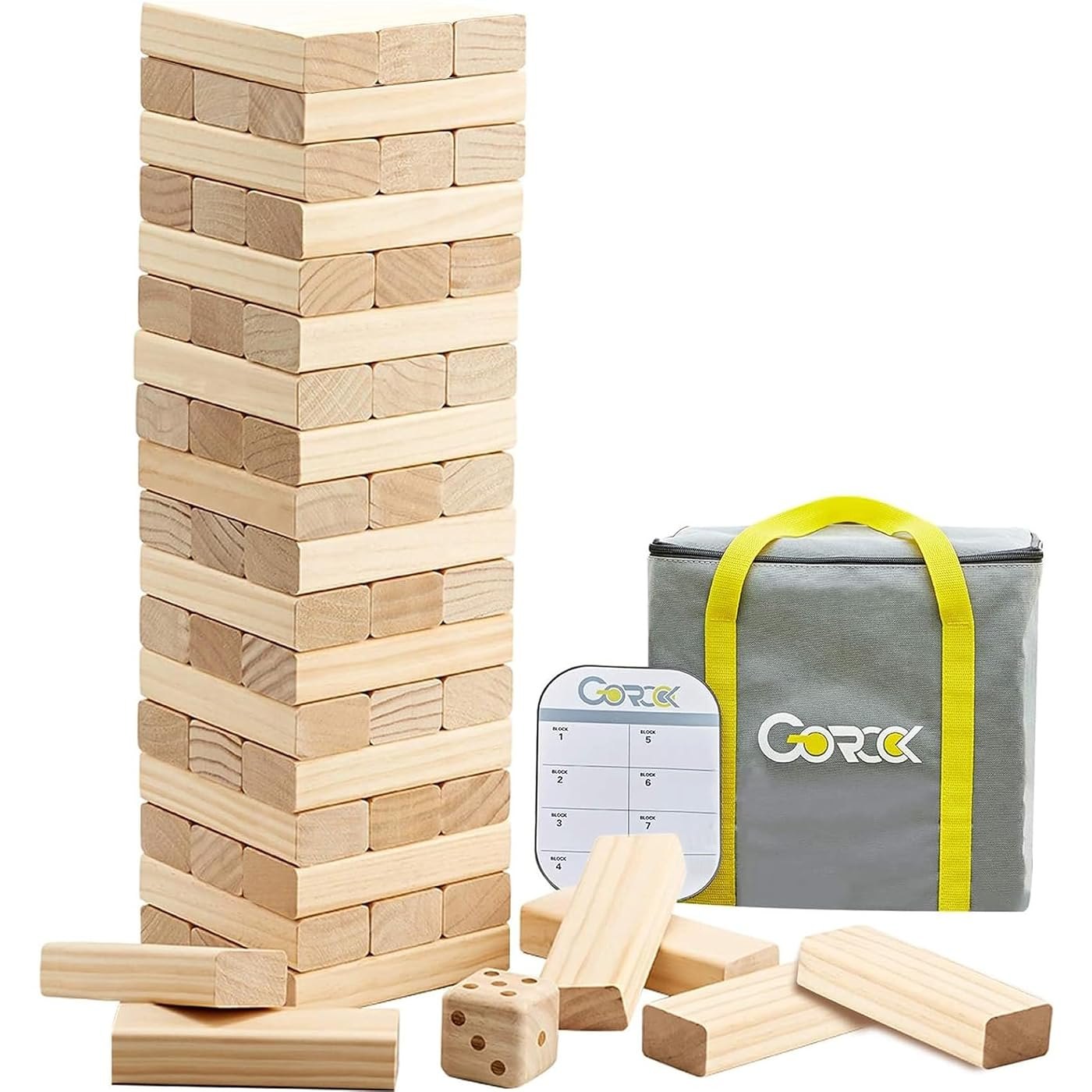
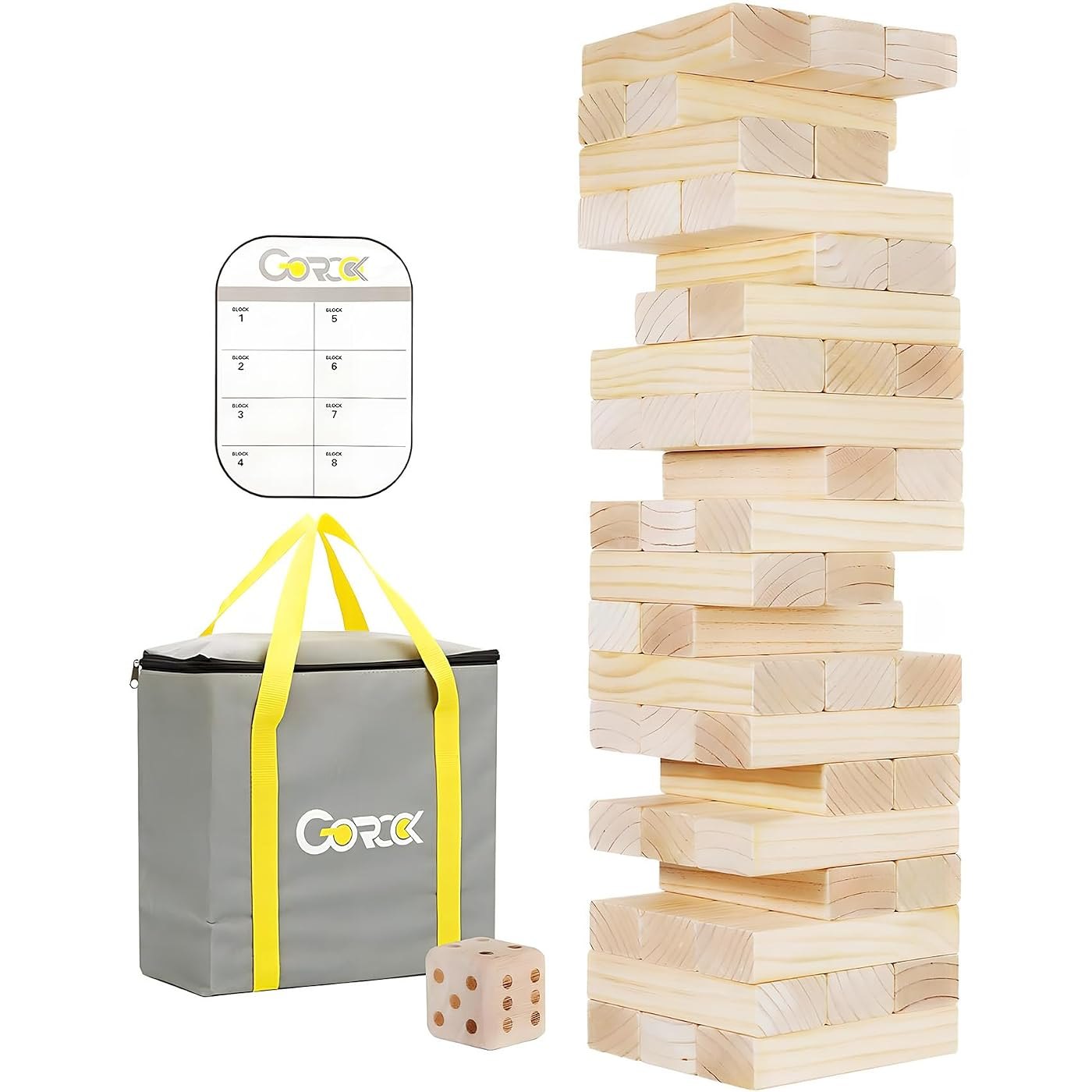
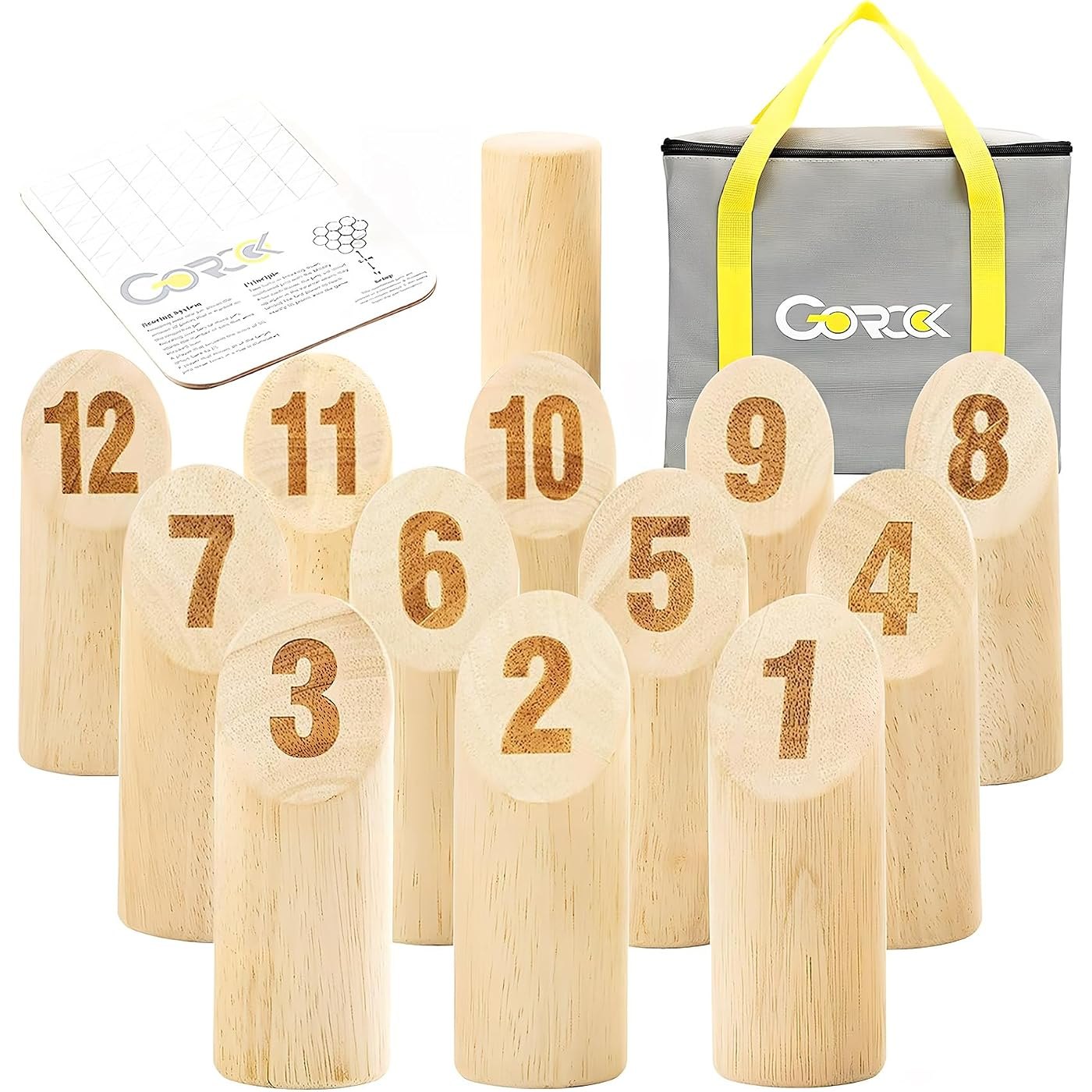
Everything above came out of using our own four sets — three giant tumbling towers and the numbered toss game. Each has its own page with measurements and what buyers said.