 GOROCK
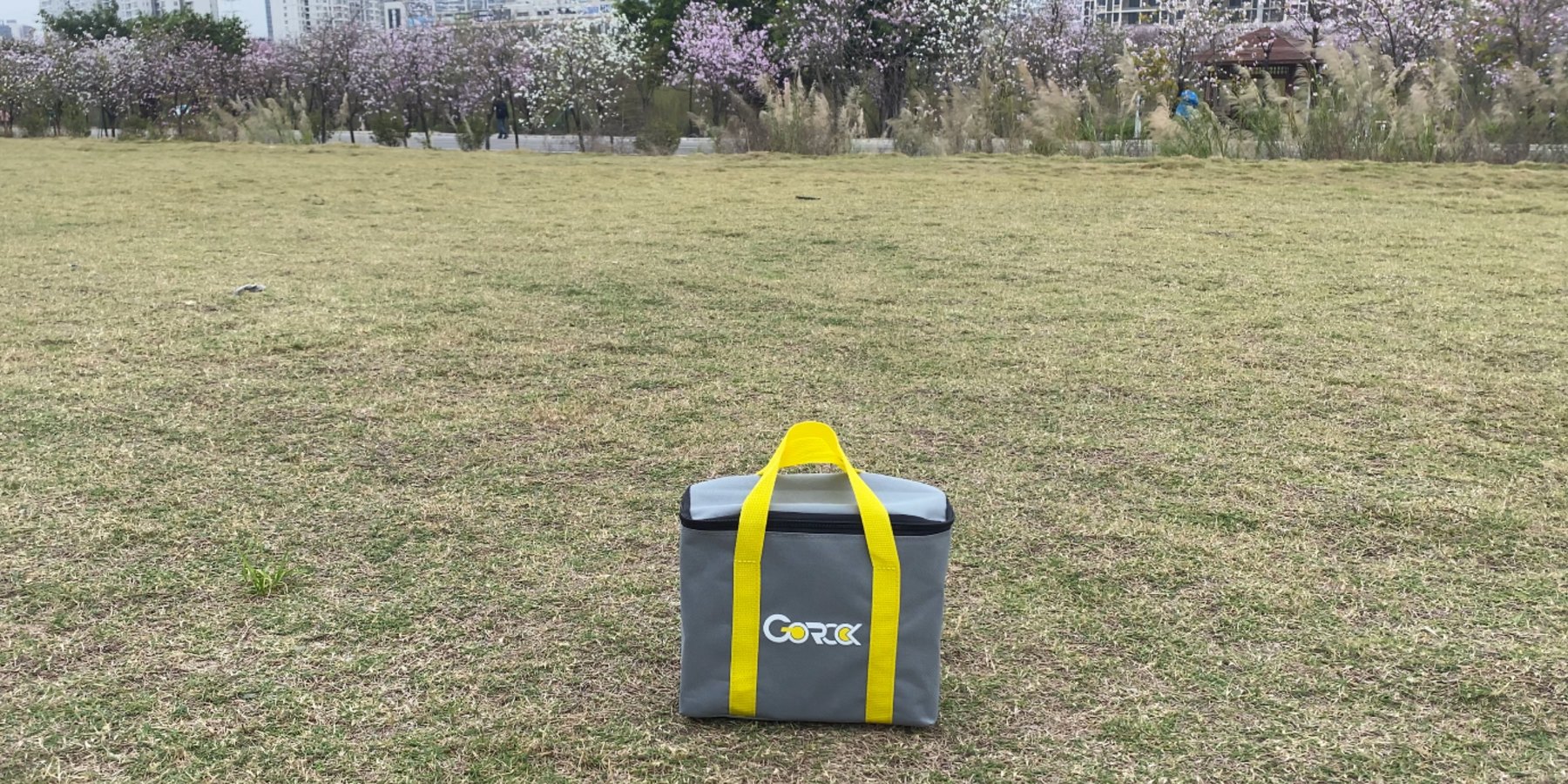
GOROCK giant yard games, cut for the patch of grass you already have
We make four sets. Three of them stack, one of them gets thrown, and all four live in a bag by the back door between the days you need them.
Every set we make
4 sets · 3 tumbling towers · 1 toss game
GOROCK
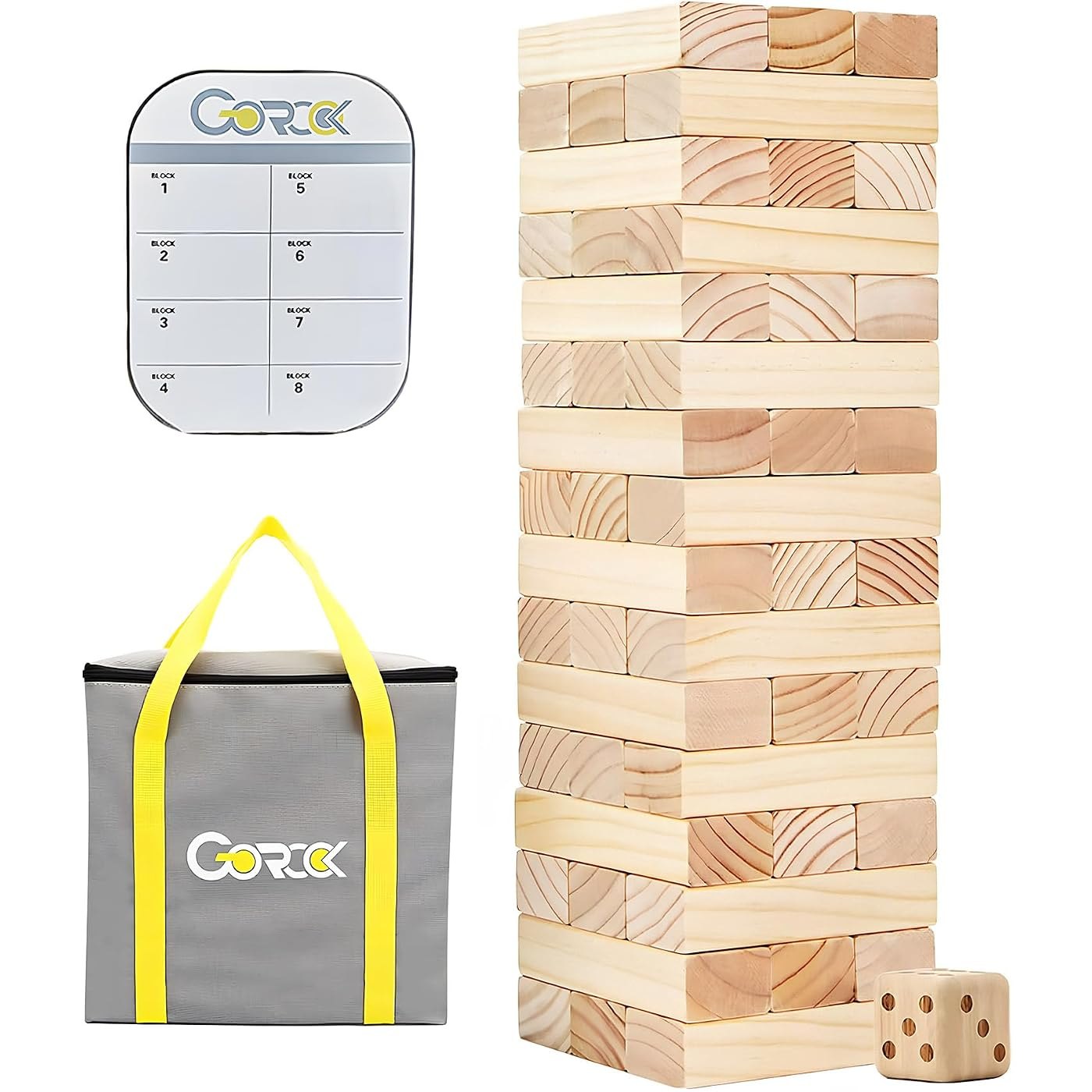
57-Piece Giant Tumbling Tower, stacks past 4.2 ft
Start here if the lawn is small or the set is going to travel.
$38.24
4.7 from 1090 buyer reviews
In the bag and shipping
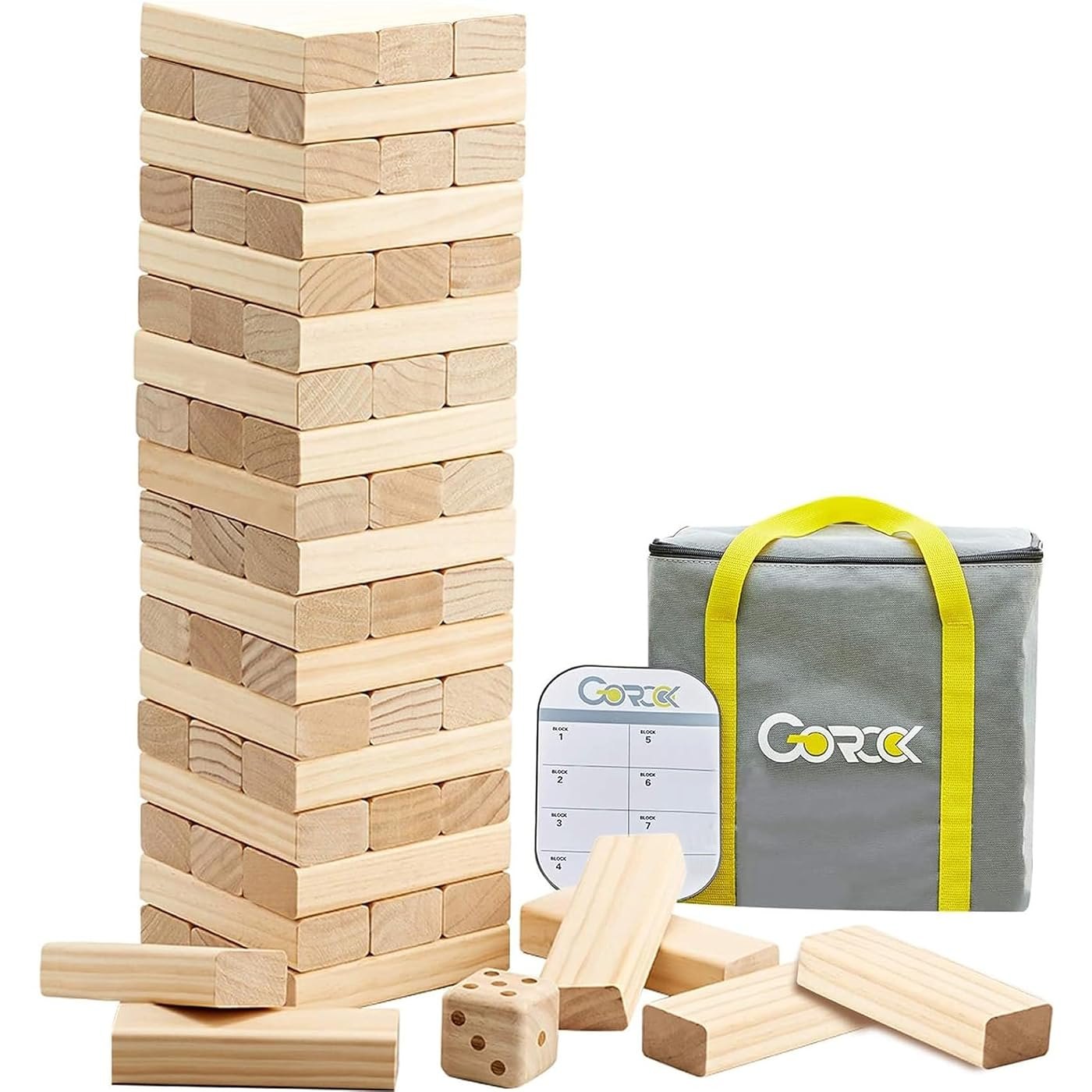
GOROCK
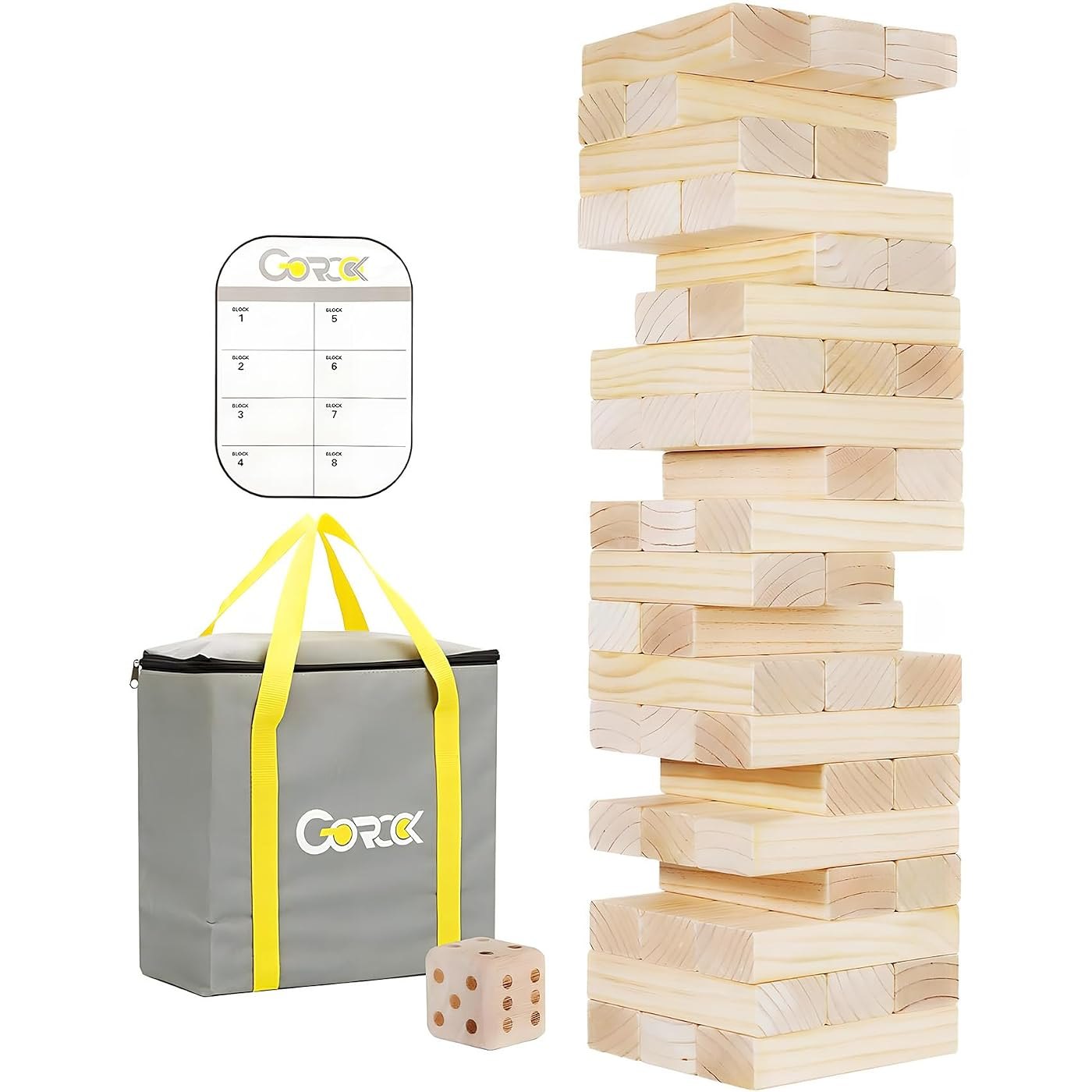
60-Piece Giant Tumble Tower with dice and scoreboard, stacks to 5 ft
Pick this one if the group already knows how the plain game goes.
$49.99
4.7 from 1090 buyer reviews
In the bag and shipping
GOROCK
Jumbo 60-Piece Tumble Tower, 7.15-inch blocks, stacks past 5 ft
Take this one if the lawn is big and the party runs long.
$75.99
4.7 from 1090 buyer reviews
In the bag and shipping
GOROCK
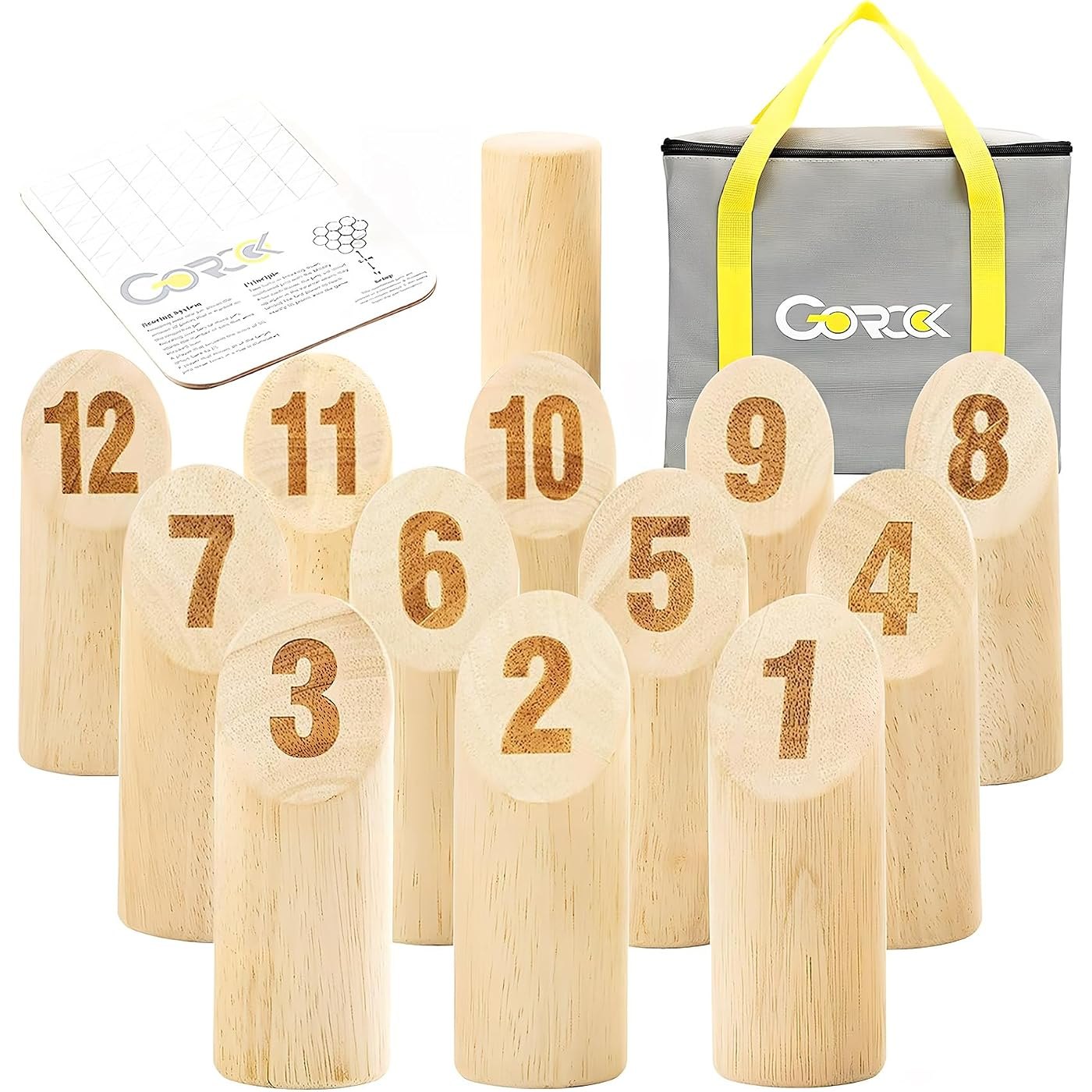
Numbered Block Toss Set, 12 blocks and a throwing pin
Add this one when the tower needs something to follow it.
$36.49
4.4 from 408 buyer reviews
In the bag and shipping
Why we only make four things
There is a version of this company that sells thirty giant games. We have been asked for it more than once — add cornhole boards, add a giant connect four frame, add ladder toss, put a logo on everything and call it an event catalogue, with a customized colourway for every buyer who asks. We keep not doing it, and the reason is boring: the four sets we do make get used, and the ones we were asked to add would mostly get stored. The design has not changed in three years either, because nothing about it needed to.
A giant tumbling tower comes out of the bag at every kind of gathering we have ever been invited to. A backyard birthday. A wedding where the reception ran dry for an hour between the meal and the dancing. A corporate away day where nobody wanted to do the trust exercise. A tailgate in a car park with no grass at all. The same stack of pine blocks worked in every one of those rooms, and it worked because it needs no teams, no explanation and no space larger than a doormat.
So the catalogue is short on purpose. Three tumbling towers, because yards come in three sizes and so should the game. One numbered toss set, because at some point in the afternoon everyone wants to throw something instead of pulling it.
Three tower heights, and how to pick one
The 57-block set is the small one. It stacks past four feet two inches at full height, it weighs little enough that one person carries it out, and it is the set we hand to anyone whose lawn is a strip rather than a field. If the giant game is going to travel — to the beach, to a friend's garden, to a rented hall — this is the size that travels.
The 60-block five-foot set is the one with the dice. Same block size, a longer run, and a pair of specialty dice that tell you which block you are allowed to pull. A dry-wipe scoreboard rides in the bag. That combination is what turns the classic quiet stacking game into something a big group can play loudly, which is why it is the set that goes to weddings.
The jumbo set uses blocks seven and a sixth inches long. Sixty of them, stacking past five feet, with a mass behind every pull that you feel in your fingertips before the tower moves. It wants about a metre of clear space on every side and it wants adults nearby. Given both, it is the best giant game we know how to build.
None of the three needs assembly, a frame, pegs or a power socket. You find level ground, you stack, you play.
The toss game, and why it is not just a smaller tower
The numbered block toss set plays like kubb, the lawn game thrown across half of northern Europe with a pin instead of a ball: twelve numbered blocks stood up in a circle, one throwing pin, and a scoring rule that rewards hitting exactly what you aimed at. Knock one block down and you score the number on it. Knock three down and you score three, not the sum. First to fifty wins, and overshooting fifty drops you to twenty-five.
That last rule is the whole game. A player who is winning comfortably has to start missing on purpose, and a player who was out of it two rounds ago is suddenly back. We have watched games that looked finished run another twenty minutes on that rule alone.
It is also the set with the smallest footprint in the bag. Rubberwood blocks, a drawstring sack, less weight than a bag of groceries. There is no ball in it, which matters more than it sounds: a ball goes over the fence or into the hedge, and a thrown pin lands where you can see it. It ends up at the beach, in the boot of the car for the whole summer, and at every picnic where the grass turned out to be too uneven for a tower.
What the wood is, and what it is not
Everything we cut is pine or rubberwood, kiln-dried before it is sized, sanded on all six faces, and left unfinished. The premium stock costs us more per block than the cheap alternative and we buy it anyway, because a block that splits along the grain in its second autumn makes the whole set unplayable rather than merely scruffy.
Unfinished is a deliberate choice, not a saving. Bare wood grips bare wood. A varnished block slides against its neighbours, and a tower built from sliding blocks comes down on the fourth pull instead of the fortieth. The trade is that our blocks grey a little after a season outdoors. That is the wood doing what wood does.
We check corners by hand before a set is bagged. No hooks, no burrs, no splinters waiting at the edge — on a giant block those are not a cosmetic problem, they are the thing that ends the afternoon early.
Where these actually get played
Backyards first, obviously. But the sets that come back to us with the most wear are the ones bought for events: wedding receptions, village fêtes, corporate days out, school fairs, fundraisers where somebody needed an activity that works for a queue of strangers.
A giant game does something at an event that board games cannot. It is visible from across the field, it explains itself, and anyone can join at any point without being taught. Two people can play it, or eight can. You do not need to pick teams or commit to a round.
Indoor works too, with one caveat: a jumbo tower coming down on a hard floor is loud and the blocks scatter further than you expect. For a hall or a garage, the 57-block set is the sensible choice. For a tailgate on tarmac, the toss game is the one — it does not need to balance on anything.
Prices, sizes and where to buy
Each set has its own page here with the full block measurements, what comes in the bag, the current price and what buyers have actually written about it. The buttons take you to the listing where the set is sold. Prices there move with stock and season — the number on our pages is the one we last read off the listing, and the live figure is always the one on the listing itself.
If you are choosing between two heights and cannot decide, the short answer is almost always measure your lawn first. We wrote that up properly in the guides, along with how the tower game is played and how to score the toss set without the argument.
What buyers wrote
Six of them, copied across word for word.
Worth the money, durable, fun to play
Was a present for my son and his family. They use it when they have backyard parties in the summer along with other games they have. Good quality, durable, fun to play, worth the money.
5 out of 5 · verified buyer
Fun game
I bought this to use as a game at my daughter’s wedding. We wrote activities on each block and guests took turns doing the activity they pulled. It was a big hit! It is also nice that this set comes with a convenient carrying case.
5 out of 5 · verified buyer
Fun to play with
I still have this jenga blocks years later & still in great condition !!
5 out of 5 · verified buyer
Large tower set
Purchased this for our class project auction item. The blocks were well made, smooth and consistent. My students painted the long edges and used sharpie markers on the wider top long edge.i painted all the short end edges with acrylic paint just for the look. We loved the carry bag and extra items which allow for varied play. It didn’t come with instructions, though. I was able to find how tos on You tube. If you’re familiar, with jenga, it can be played just by taking turns. However, the die and score keeper were bonuses and help if you want to vary the play. They’d be fine just to use as it, but it worked great as a class project for auction.
5 out of 5 · verified buyer
Fun while camping!
Fun game while camping. Thought the pieces would be bigger but it’s the brand I bought. Check the sizing before you buy so you get what you want.
5 out of 5 · verified buyer
Fun family game
This game was delivered yesterday and we have played it several times already. It’s a very fun family friendly game. Downloading a score keeping app makes it much easier than using the scoreboard but they have a scoreboard in the bag. One of our pieces is already cracked but I think that’s probably just something that happens with this game, you are throwing a heavy dowel at other dowels.
5 out of 5 · verified buyer
Giant yard games for adults, in plain terms
A giant yard game is any classic game scaled up until it has to be played standing. Ours are wooden: a stacking tower you pull blocks from, and a numbered toss set you throw a pin at. The appeal is the same in every garden — the set is big enough to be the reason people walk over, and simple enough that nobody has to be taught.
Size is the decision that matters. A tower that stacks past five feet is a better game than one that stops at four, but only if there is a metre of clear grass around it and adults standing by. A premium set that lives in its bag because the yard is too small is worth less than the small set that comes out every weekend. Pick for the space you have, not the space you wish you had.
Everything we sell is outdoor games first and indoor games second. Grass is forgiving when a tower falls; a kitchen floor is not. If the plan is an indoor event, pick the smallest tower and keep the toss game for the car park.
Out of the bag
GUIDE
Finding a level patch before the first block goes down
Every bad game of giant tower we have watched started with ground nobody checked.
GUIDE
How the giant tumbling tower game is played
The rules fit in a paragraph. The arguments do not, so here is the long version.
GUIDE
Which giant tumbling tower height fits your yard
We make the giant tumbling tower game in three heights. Four questions, in this order, and the set picks itself.
GUIDE
Scoring the numbered toss game without arguments
The scoring is the game. Get it right and nobody has to referee.
Giant yard game questions
How do you play the giant tumbling tower game?
Stack the blocks three to a row, turning each row ninety degrees from the one below. Players take turns pulling a block out with one hand and placing it on top. Whoever makes the tower fall loses the round. The two larger sets add dice that tell you which block you may take.
How much space does a giant tower need?
The base is about a foot square, but the clearance matters more than the base. Leave roughly a metre on every side for the 57-block set and a little more for the jumbo one, so nobody is standing where the blocks land.
What is the tumbling tower game called?
Most people know the small boxed version by its brand name. Scaled up and cut from pine it is sold as a giant tumbling tower, a tumble tower or giant timbers — the same game at every name.
Are these giant games good for weddings?
They are the reason the dice-and-scoreboard set exists. A tower holds a reception together through the hour between the meal and the dancing, works for guests of any age, and needs nobody to run it.
Can these be played on pavement or indoors?
Yes, with the smaller sets. A jumbo tower falling on a hard floor is loud and the blocks travel. The numbered toss game is the one that genuinely does not care what it is standing on.
How high can the tower go before it falls?
Past four and a half feet for the 57-block set and past five for the two 60-block sets, if the pulls are careful. The record in any given garden is usually set by the person who then knocks it over trying to beat it.